Kunmes

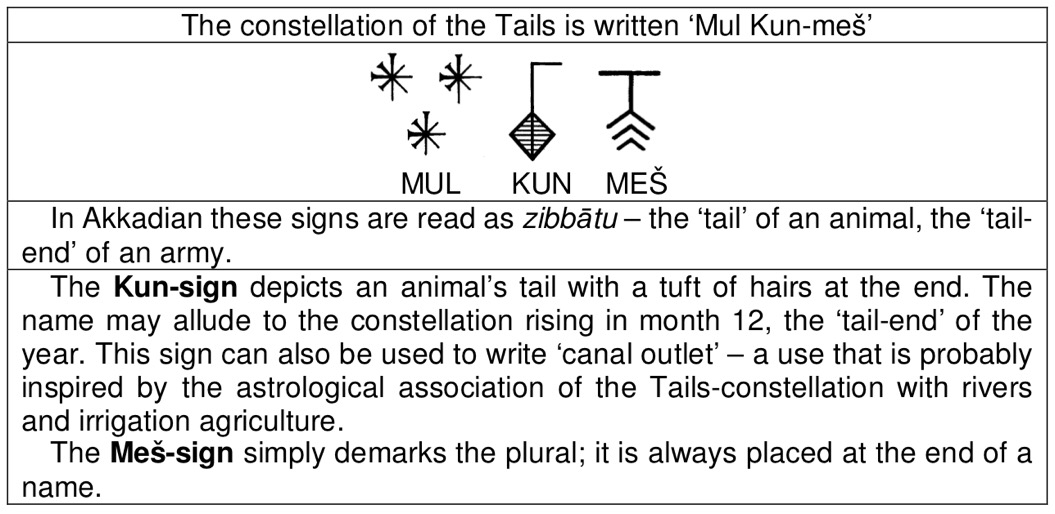
A sumér zodiákus Halak jegynek megfelelő neve Kun-Mes. A nyelvészek Farkak jelentéssel adatolják ezt a csillagképet, minthogy Kun (ahogy kûn, KONY és konyec szavaknál is láttuk) farkat, a ló farkát (vagy ékalakú pofáját) jelenti, Mes pedig a többesszámot(?). MES Péterfai Jánosnál Ifjú, Hős jelentésű, de MISZ-hez, mézhez is köthető lehet. MES címnél legutóbb alternatív levezetése is született Kunmes-nek: MES a mes-fa, a messzi fa, a Világfa, a Tejút neve és ennek alsó vaskori ideje a Halak (mikor is a tavaszpont[1] a Halakba ér).
assets/Kunmes_image1.png|invert_dark

Gavin White Babylonian Star Lore...

...című könyvében ír róla:

THE POST-WINTER SOLSTICE PERIOD

Unlike the familiar calendar system that commences in the spring, the symbolic cycle embodied in the stars makes most sense when you start and end with the winter solstice. When the longest night is celebrated, the sun's power is at its weakest and it has reached its lowest and most southerly station in the heavens. But the crucial turning point has been attained and from this time onwards the sun's light and power increase day by day. The period following on from the winter solstice thus celebrates the rebirth of the sun from the waters of chaos and the re-emergence of life, in all its manifold forms, from the realm of darkness and death.
As mythical symbols, the Horse and Stag both represent the rebirth of the sun. This is most clearly seen in the mythology of the horse, whose principle mythic duty was to pull the chariot of the sun. The solar chariot ultimately governs the three major cycles of time recognised in myth – the rising of the chariot announces the dawn of each and every day, its annual rising after mid-winter ushers in the New Year, and in terms of the whole cycle of creation its rising celebrates the original birth of the sun from the primordial waters of chaos. The Horse was probably chosen for this exalted role because of its speed and its shimmering mane, which was thought to represent radiating beams of sunlight.
The Stag is, in many respects, a very similar symbol to the Horse; it too has an age-old association to the sun and fire, and like the horse's mane the stag's horns also represent rays of sunlight. The annual renewal of its horns further predisposes it to be a symbol of rebirth, and in the form of the reindeer sledge of Father Christmas, the Stag is still honoured to this day as the symbol of the sun's wintertime passage. As symbols of solar rebirth the Horse and the Stag are thus very appropriate symbols to find at the very start of the stellar calendar.
The same theme of solar rebirth is expressed in a somewhat different form in the adjacent constellations known as Anunitum, the Swallow and the Field. These star figures together constitute a vivid depiction of the 'myth of the Syrian goddess', which can be thought of as the master-myth of this season. The myth runs as follows – two fish found an enormous egg floating in the depths of the river Euphrates, the fish guided the egg up from the watery depths of the river and rolled it onto dry land, where a dove appeared and started to brood it. In due time, the Syrian goddess herself was born from the egg. On account of this myth, fish and birds were held to be particularly sacred to the Syrian goddess. The star-map indicates that the setting of this myth and its participants are not, in fact, of this earth, but are to be found in the heavens. What is of pivotal importance is the identity of the 'river Euphrates'. Apart from the earthly river, the 'Euphrates' can also be found on the star-map where it is closely associated with the watery outflow joined to the Swallow. This heavenly river actually runs parallel to the course of the ecliptic (represented by the dotted line on the main map) and now that this fact is established, the action of the fish can be better understood – they escort the sun (the mythical egg) from its lowest point at the solstice and guide it onto its ascending path that leads towards the spring and 'dry land', which is represented on the star-map by the constellation of the Field. The myth as a whole can now be understood as an image of time that has guided us from the darkness of winter to the beginning of spring.
Continuing the watery theme we next encounter the Babylonian equivalents to Capricorn and Aquarius, known as the Goatfish and the Great One. The compound nature of the Goatfish is best understood in terms of the symbolism that we have already examined. In short, I would argue that it is essentially a combination of the Stag and the Fish – the Stag representing the renewal of the sun's power at midwinter, while the Fish acts as a guardian to the nascent sun and guides it upon the first stages of its ascending path.
The watery symbolism continues in the figure known as the Great One, the Babylonian name for our Aquarius. As a seasonal symbol, the Great One with his overflowing vases symbolises the increased rains and floods of winter and early spring. Along with the constellation of the Field, which represents a plot of arable land, the Great One can be thought of as the 'Irrigator' – as the rising of these constellations mark the season when the ripening barley is irrigated before the springtime harvest. Although the precise location of the Swine is still a matter of debate, it is very likely that his star is to be found in the rebirth sector of the star-map as it is attributed to the god Damu, whose name can be translated as the 'child'. Mythic texts portray Damu as one of the dying gods, closely related to Dumuzi, who vanished from the earth and was mourned by his mother and sister. Like all the dying gods he does eventually return to the earth – and true to form, myths speak of him escaping from the underworld via a river. All in all, the symbolism of the constellations that rise after the winter solstice concur in depicting a time when the sun re-emerges from the darkness of winter and starts its ascent into the heavens. Similarly, in the unfolding lifecycle of the dying god, Damu (the 'Child'), escapes from the underworld and starts to make his way back to the upper worlds. The image of the child escaping the underworld, and of the nascent sun dwelling within the waters, can also be interpreted in human terms as the foetus dwelling within the creative waters of the womb. The multitude of images all relate one essential truth – that life, in all its myriad forms, takes shape within the creative waters.

A TÉLI NAPFORDULÓ UTÁNI IDŐSZAK

Az ismert naptárrendszerrel ellentétben, amely tavasszal kezdődik, a csillagokban megtestesülő szimbolikus ciklusnak akkor van a legtöbb értelme, ha a téli napfordulóval kezdjük és fejezzük be. Amikor a leghosszabb éjszakát ünnepeljük, a Nap ereje a leggyengébb, és elérte legalacsonyabb és legdélebbi állomását az égbolton. A döntő fordulópont azonban elérkezett, és ettől kezdve a Nap fénye és ereje napról napra növekszik. A téli napfordulót követő időszak így a Napnak a káosz vizéből való újjászületését és az életnek a sötétség és a halál birodalmából való újbóli megjelenését ünnepli, annak minden sokféle formájában.
Mint mitikus szimbólumok, a Ló és a Szarvas egyaránt a Nap újjászületését jelképezi. Ez a legvilágosabban a ló mitológiájában látható, amelynek fő mitikus feladata az volt, hogy a Nap szekerét húzza. A napszekér végső soron a mítoszokban felismert három nagy időciklust irányítja - a szekér felemelkedése minden egyes nap hajnalát jelenti, a tél közepe utáni éves felemelkedése az új évet vezeti be, és a teremtés teljes ciklusát tekintve a felemelkedése a Napnak a káosz ősvizéből való eredeti születését ünnepli. A lovat valószínűleg gyorsasága és csillogó sörénye miatt választották erre a magasztos szerepre, amelyről úgy gondolták, hogy a napfény sugárzó sugarát jelképezi.
A szarvas sok tekintetben nagyon hasonló szimbólum, mint a ló; ősi kapcsolat fűzi a naphoz és a tűzhöz, és a ló sörényéhez hasonlóan a szarvas szarvai is a napsugarakat jelképezik. Szarvainak évenkénti megújulása még inkább az újjászületés szimbólumává teszi, és a szarvas a Télapó rénszarvas szánjának formájában a mai napig a Nap téli átvonulásának jelképeként tisztelik. A Ló és a Szarvas mint a nap újjászületésének szimbólumai tehát nagyon is alkalmasak arra, hogy a csillagászati naptár legelején találjuk őket.
Ugyanez a napújjászületés témája némileg más formában jelenik meg a szomszédos Anunitum, a Fecske és a Mező nevű csillagképekben. Ezek a csillagfigurák együttesen a "szíriai istennő mítoszának" eleven ábrázolását alkotják, amelyet az évszak főmítoszának tekinthetünk. A mítosz a következőképpen hangzik: két hal egy hatalmas tojást talált az Eufrátesz folyó mélyén úszva, a halak felhúzták a tojást a folyó vizes mélységéből, és a szárazföldre gurították, ahol megjelent egy galamb, és elkezdte költögetni. Idővel maga a szíriai istennő született a tojásból. E mítosz miatt a halakat és a madarakat különösen szentnek tartották a szíriai istennő számára. A csillagtérkép azt mutatja, hogy e mítosz helyszíne és szereplői valójában nem e földi, hanem az égbolton találhatók. Ami kulcsfontosságú, az az "Eufrátesz folyó" azonossága. A földi folyón kívül az "Eufrátesz" a csillagtérképen is megtalálható, ahol szorosan kapcsolódik a Fecskéhez csatlakozó vízi kiáradáshoz. Ez az égi folyó valójában az ekliptika menetével párhuzamosan fut (a főtérképen a szaggatott vonal ábrázolja), és most, hogy ez a tény megállapítást nyert, jobban megérthető a halak tevékenysége - elkísérik a Napot (a mitikus tojást) a napforduló idején a legmélyebb pontjáról, és a felfelé vezető útjára terelik, amely a forrás és a "szárazföld" felé vezet, amelyet a csillagtérképen a Mező csillagkép ábrázol. A mítosz egésze most már úgy értelmezhető, mint az idő képe, amely a tél sötétségéből a tavasz kezdetéig vezetett bennünket.
Folytatva a vizes témát, legközelebb a Bak és a Vízöntő babiloni megfelelőivel, a Kecskehallal és a Gula-val találkozunk. A Kecskehal összetett jellege a már vizsgált szimbolika szempontjából érthető meg a legjobban. Röviden, azt állítom, hogy lényegében a Szarvas és a Hal kombinációja - a Szarvas a Nap erejének tél közepén történő megújulását jelképezi, míg a Hal a születő Nap őrzőjeként működik, és vezeti azt a felemelkedő útjának első szakaszaiban.
A vizes szimbolika a Gula néven ismert alakban folytatódik, amely a mi Vízöntőnk babiloni neve. Évszakos szimbólumként Gula a túlcsorduló vázáival a tél és a kora tavasz megnövekedett esőit és áradásait jelképezi. A szántóföldet jelképező Mező csillagképpel együtt a Gula-ra úgy is gondolhatunk, mint az "öntözőre" - mivel e csillagképek felemelkedése azt az időszakot jelzi, amikor az érő árpát a tavaszi aratás előtt megöntözik. Bár a Disznó pontos helye még mindig vita tárgyát képezi, nagyon valószínű, hogy csillaga a csillagtérkép újjászületési szektorában található, mivel Damu istennek tulajdonítják, akinek neve 'gyermek'-ként fordítható. A mitikus szövegek Damut a haldokló istenek egyikeként ábrázolják, aki szoros rokonságban áll Dumuzival, aki eltűnt a földről, és akit anyja és nővére gyászolt. Mint minden haldokló isten, végül ő is visszatér a földre - és a mítoszok szerint a mítoszok szerint egy folyón keresztül menekül az alvilágból. Mindent egybevetve, a téli napforduló után felbukkanó csillagképek szimbolikája egybecseng abban, hogy azt az időszakot ábrázolja, amikor a Nap újra felemelkedik a téli sötétségből, és megkezdi felemelkedését az égbe. Hasonlóképpen, a haldokló isten, Damu (a "Gyermek") kibontakozó életciklusában Damu kiszabadul az alvilágból, és elindul vissza a felső világokba. Az alvilágból menekülő gyermek és a vízben lakó születő Nap képe emberi nyelven úgy is értelmezhető, mint az anyaméh teremtő vizében lakó magzat. A képek sokasága mind egyetlen alapvető igazságra utal - arra, hogy az élet, annak minden számtalan formájában, a teremtő vizekben ölt alakot.

THE TAILS

The origins of Pisces as a pair of fish can be traced back to the Babylonian constellation called the Tails. Even the concept of the cord or ribbon that joins the two fish together can be found in late Babylonian star-lore, where the 'bright star of the ribbon of the Fishes' is regarded as the lead star of the so-called 'Normal stars' – a series of 32 stars located close to the ecliptic that are used as reference points for locating the planets. The cord itself is doubtless another example of a celestial bond that often appears in Babylonian star-lore in connection with the location of the solstices and equinoxes – the points in the solar year that are figuratively 'fixed' in relation to the stars.
There is every reason to believe that the idea of the cord would only have been applied to these stars in the latter half of the 1st millennium when they came to mark the position of the spring equinox. Before this time the two component parts of the cord would have been envisioned as the two great rivers of Mesopotamia, the Tigris and Euphrates. The origin of the 'knot' that unites the two cords represents the Shat-al-Arab where the two great rivers join together before flowing into the Gulf of Bahrain.
This image of the two rivers is the ultimate origin of the symbolism of Pisces – as rivers are typically represented in Babylonian art as a pair of wavy lines with tiny fishes added along their courses to further emphasise their watery nature (see fig 2). The whole image is copied from nature as the 12th month of the year, which is marked by the rising of the Tails, is the season that river carp swim upstream to their breeding grounds in rivers swollen by melt waters from the mountains.
As the basic economy of Mesopotamia was founded on irrigation agriculture, the floodwaters of the Tigris and Euphrates were essential to the ongoing prosperity of the land. The Tails can thus be seen to form an integral part of the farming symbolism centred on the nearby constellation of the Field. When the Tails are favourably aspected they are thought to predict good floods: 'If the Wild Sheep approaches the Tigris-star: there will be rain and flood'; and an abundant flood naturally brings a plenteous harvest in its train: 'If Jupiter stands in the Tails: the Tigris and Euphrates will be filled with silt; there will be prosperity and abundance in the land'.
assets/Kunmes_image3.png|invert_dark
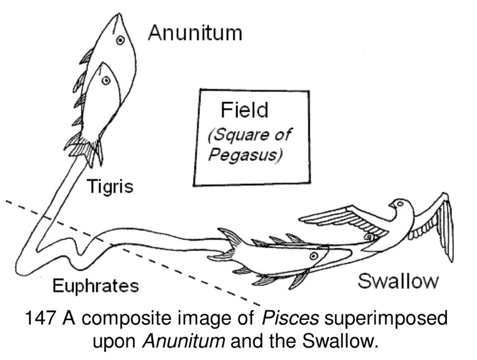
The constellation of the Tails first appears among the 'stars on the path of the Moon', a series of 16 ecliptic constellations listed in Mul-Apin that are the Babylonian forerunner of the 12 zodiac constellations. The asterism itself gives the impression of being a newly formed figure specifically designed to represent the 12th month of the year. As its full name reveals – 'the Tails of Anunitum and the Swallow' – the Tails is really a composite constellation, made up from the parts of other pre-existing star figures. The name only becomes understandable in light of the illustration (fig 147 above) that superimposes the modern image of Pisces upon the corresponding Babylonian constellations. It shows that the Piscean fish are considerably smaller than their Babylonian counterparts – and that only the tails of the respective constellations actually correspond to each other.

A FAROK

A Halak, mint halpár eredete a Babiloni csillagképre vezethető vissza, amelyet Faroknak neveztek. Még a két halat összekötő zsinór vagy szalag fogalma is megtalálható a késő babiloni csillagászatban, ahol a "Halak szalagjának fényes csillagát" az úgynevezett "Normálcsillagok" vezető csillagának tekintik - egy 32 csillagból álló, az ekliptika közelében elhelyezkedő sorozatnak, amelyet a bolygók helymeghatározásához referenciapontként használnak. Maga a zsinór kétségtelenül egy másik példája annak az égi köteléknek, amely a babiloni csillagászatban gyakran megjelenik a napfordulók és napéjegyenlőségek - a napév azon pontjai, amelyek képletesen "rögzítettek" a csillagokhoz viszonyítva - elhelyezkedésével kapcsolatban.
Minden okunk megvan azt hinni, hogy a zsinór gondolatát csak az 1. évezred második felében alkalmazták ezekre a csillagokra, amikor a tavaszi napéjegyenlőség helyét jelölték. Ezt megelőzően a zsinór két alkotóelemét Mezopotámia két nagy folyójának, a Tigrisnek és az Eufrátesznek képzelték el. A két zsinórt egyesítő "csomó" eredete a Shat-al-Arabot jelképezi, ahol a két nagy folyó egyesül, mielőtt a Bahreini-öbölbe ömlene.
Ez a két folyó képe a Halak szimbolikájának végső eredete - mivel a folyókat a babilóniai művészetben jellemzően hullámos vonalak párjaként ábrázolták, amelyek mentén apró halakat helyeztek el, hogy tovább hangsúlyozzák vizes jellegüket (lásd a 2. ábrát). Az egész képet a természetből másolták, mivel az év 12. hónapja, amelyet a Farkasok felkelése jelöl, az az évszak, amikor a folyami pontyok a hegyek olvadékvizei által felduzzasztott folyókban úsznak felfelé a szaporodóhelyeikre.
Mivel Mezopotámia alapvető gazdasága az öntözéses mezőgazdaságon alapult, a Tigris és az Eufrátesz árvizei nélkülözhetetlenek voltak az ország folyamatos jólétéhez. A Farkak így a közeli Mező csillagképre összpontosító mezőgazdasági szimbolika szerves részének tekinthetők. Ha a Farok kedvező fényszögben áll, akkor jó árvizeket jósolnak: "Ha a Vadjuh megközelíti a Tigris-csillagot: eső és áradás lesz"; és a bőséges áradás természetesen bőséges termést hoz magával: "Ha a Jupiter a Farokban áll: a Tigris és az Eufrátesz megtelik iszappal; jólét és bőség lesz a földön".
A Farok csillagkép először a "Hold útjának csillagai" között jelenik meg, a Mul-Apinban felsorolt 16 ekliptikus csillagkép között, amelyek a 12 állatövi csillagkép babiloni előfutárai. Maga a csillagkép olyan benyomást kelt, mintha egy újonnan kialakított alakzat lenne, amelyet kifejezetten az év 12. hónapjának jelölésére terveztek. Amint azt teljes neve is elárulja - "az Anunitum és a Fecske farka" -, a Farok valójában egy összetett csillagkép, amelyet más, már korábban létező csillagképek részeiből állítottak össze. A név csak a fenti illusztráció (147. ábra) fényében válik érthetővé, amely a Halak modern képét helyezi a megfelelő babiloni csillagképekre. Ebből kitűnik, hogy a Halak halai lényegesen kisebbek, mint babiloni társaik - és hogy a megfelelő csillagképeknek valójában csak a farkuk felel meg egymásnak.
Gavin White könyvének interneten elérhető kivonataiban tallózva az előző jegy a Vízöntő Gula, a következő jegy pedig a Kos/Béres Luhunga.

Lábjegyzetek


  1. Lábjegyzet:
    Úgy tűnik, valóban a tavaszpont bizonyos jegybe érése adja meg az egyes jeltartományok neveinek értelmét. Erre a Halak – Halál – Kali Yuga korszaka jó bizonyíték. ↩︎